
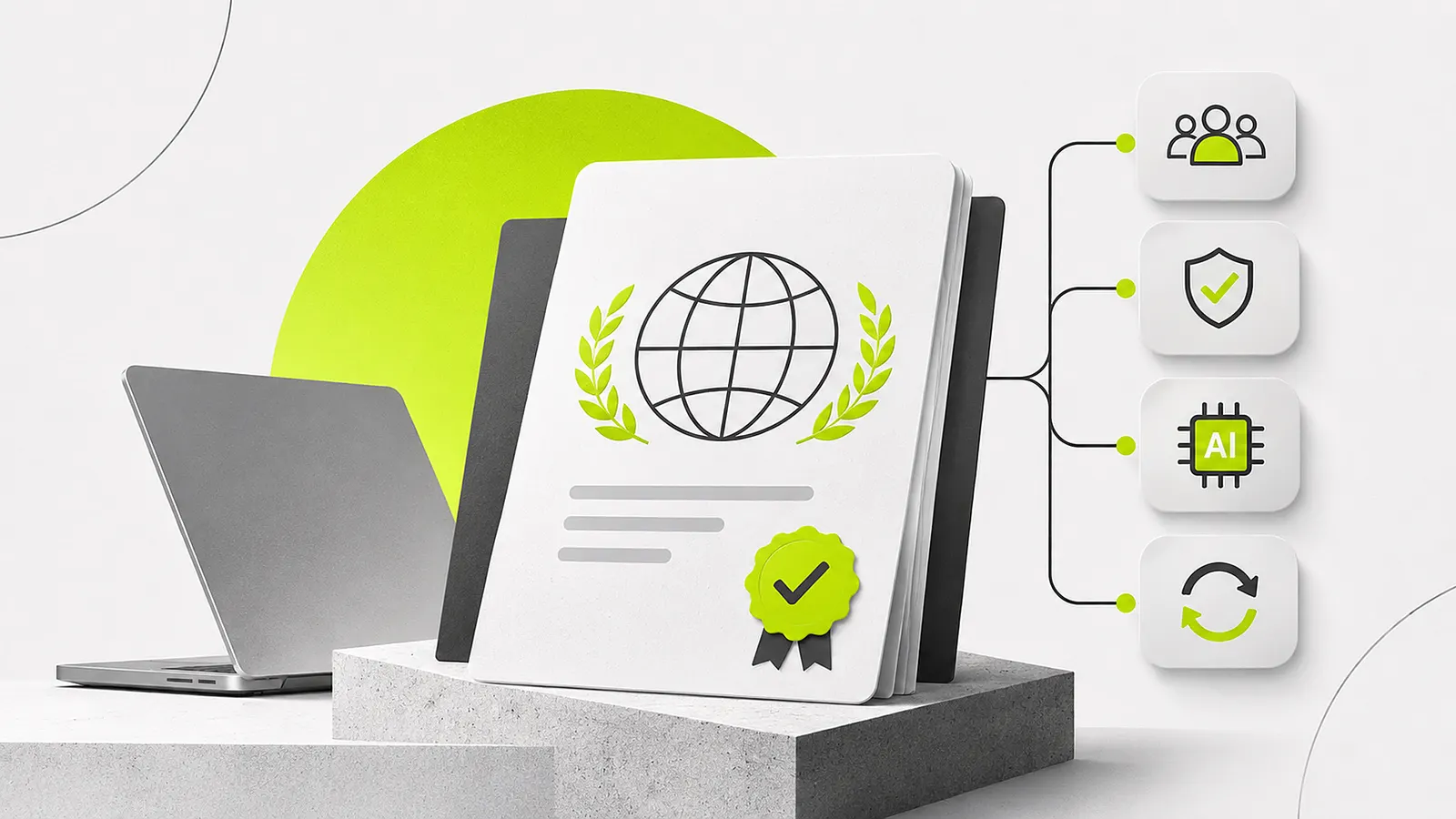
A promising AI product gets through the demo. Then procurement asks who owns AI risk, how the system is evaluated, and what happens when it behaves unexpectedly. Answers live in documents, chats, and engineer memory. ISO/IEC 42001 offers a way to organize that responsibility.
Quick answer
ISO/IEC 42001:2023 is an international standard for establishing and continually improving an artificial intelligence management system. It helps organizations define governance, responsibilities, risk processes, controls, and review cycles. It is not a magic certificate that automatically makes every AI use legally compliant.
Start with an inventory, not a policy binder
List the AI systems your company builds or uses. Include owners, purposes, model providers, data inputs, affected users, decisions, dependencies, and current safeguards. Without an inventory, policies describe an idealized company rather than the technology deployed.
Prioritize higher-impact systems first: systems handling personal data, influencing people, or taking actions with financial or operational consequences.
| Build | Evidence |
|---|---|
| AI inventory + owners | System list with purpose |
| Risk process | Assessments and residual risk |
| Controls + oversight | Human review gates |
| Improvement loop | Incidents and model changes |
Assign real accountability
Who approves a new AI integration? Who reviews incidents? Who can halt a deployment? Who maintains documentation and risk registers? A management system needs named owners with authority, not only a paragraph saying the company values responsible AI.
Define an approval process for new use cases, model changes, third-party suppliers, and significant changes in data use.
Building this for your team? Send Insiyon a short request · Build AI management controls with Insiyon
Turn principles into measurable controls
Be transparent becomes a clear AI disclosure where required and useful. Keep humans involved becomes a review queue with override permissions. Monitor risk becomes scheduled evaluation, logging, incident thresholds, and documented remediation.
ISO 42001 works alongside technical approaches such as the NIST AI Risk Management Framework. The tools are complementary, but adoption should reflect your organization's scope and obligations.
Make the system improve over time
Review incidents, evaluation results, customer feedback, model changes, and new regulations at a defined cadence. Keep evidence of decisions and corrective action. A perfect first policy is less useful than a governance process that teams actually follow.
For certification, engage an appropriate qualified body and examine the standard's complete requirements. Do not represent informal alignment as certified compliance.
How Insiyon supports AI management systems
Insiyon helps implement the product-side controls behind governance conversations: roles, approvals, logging, technical risk checks, and integration processes. That work makes buyer questionnaires answerable with evidence instead of improvisation.
We start with the highest-impact AI workflows, then expand the management cadence so the program grows with the product.
Next step with Insiyon
If enterprise buyers are requesting evidence of AI governance, Insiyon can help map technical controls and workflows that support a structured management program.